If you’re a paranormal enthusiast with a passion for historic architecture and the unexplained, Montana has a genuine gem worth exploring. Nestled in the charming capital city of Helena, Carroll College is home to some of the state’s most enduring and well-documented ghost stories. The oldest building on campus — St. Charles Hall — has been the site of reported hauntings for over half a century, rooted in a real and verifiable tragedy. From ghostly apparitions in bathroom mirrors to a beloved priest whose spirit may still walk the streets of Helena, Carroll College’s paranormal reputation is deeply woven into both campus life and the broader folklore of the city. Let’s take a journey through its storied past — and into the chilling tales that generations of students, staff, and investigators have passed down.
The History
Carroll College: A Proud Legacy in Helena
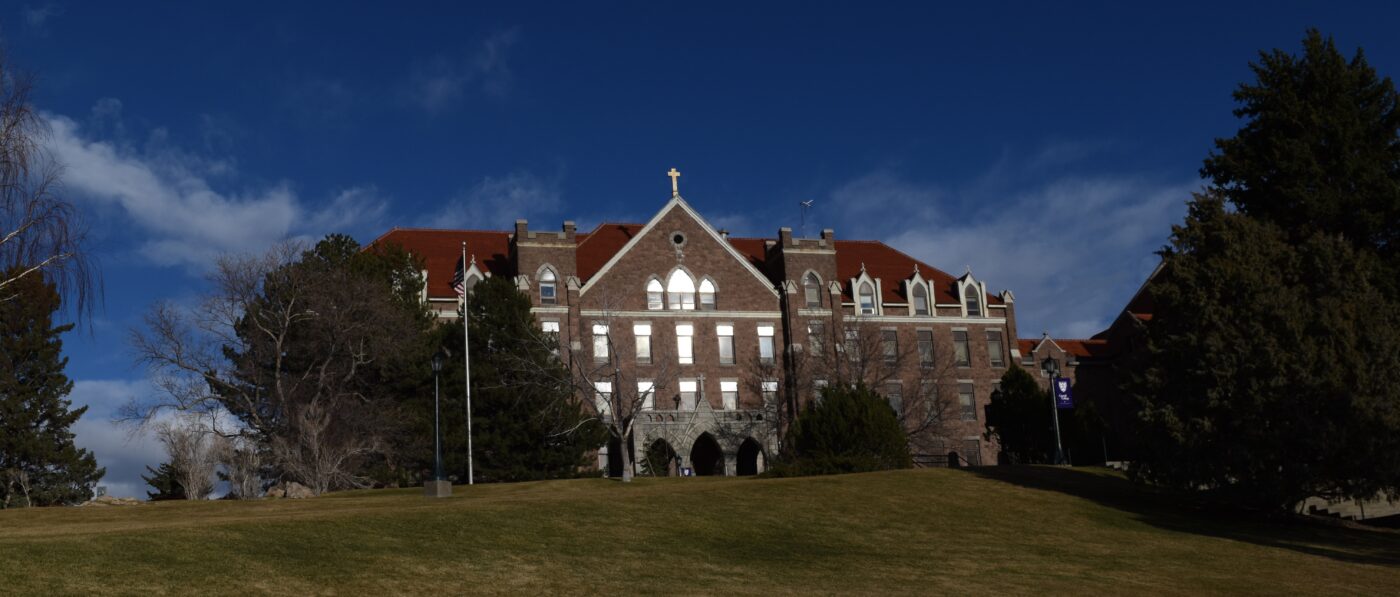
Founded on September 27, 1909, as Mount St. Charles College, Carroll College is a private Catholic institution set against the backdrop of the majestic Montana landscape. Established by Bishop John Patrick Carroll, the second Bishop of the Diocese of Helena, the college was originally intended as an all-men’s liberal arts school, with an emphasis on preparing men for careers in the priesthood, law, medicine, teaching, and engineering. President William Howard Taft himself helped lay the cornerstone of St. Charles Hall that same year. In 1932, the school was renamed Carroll College in honor of its founder, who had passed away in 1925.
Over time, Carroll developed a reputation for academic excellence, particularly in pre-medical and pre-law preparation, and today it is consistently ranked among the top regional colleges in the West by U.S. News & World Report. The campus spans 63 acres and holds 21 buildings. Its main and oldest structure, St. Charles Hall, is an example of early 20th-century Beaux-Arts architecture — a four-story brick building originally designed by architects John F. Ferguson and Charles S. Haire that once housed the entire college: classrooms, dormitories, dining hall, library, and faculty offices all under one roof.
St. Charles Hall: The Heart of Campus — and Its Hauntings
Among Carroll College’s historical structures, St. Charles Hall holds a unique place in both function and folklore. It was the first building constructed when the college opened its doors, and for years it was the only building. Today, informally known as “Charlies” by students, it still serves academic, administrative, and residential purposes, housing over two hundred students in its Main and South wings. The tallest building on campus, it offers sweeping views of the mountains that surround Helena.
The building endured the 1935 Helena earthquake with only minor damage — the top of a gable wall on the southern portion crumbled and large stones fell, which were later repurposed to build the Neuman Observatory on campus. Through world wars, cultural shifts, and over a century of daily campus life, St. Charles Hall has accumulated layers of history and memory. And it is here, on the fourth floor, that Carroll College’s most famous ghost story originates — a story rooted not in legend, but in a documented tragedy.
The Haunt
The Fourth Floor Bathroom: Carroll’s Most Famous Ghost
The most well-known and widely reported paranormal story at Carroll College centers on the fourth-floor men’s bathroom in St. Charles Hall. The tale is grounded in a real event: in 1964, a student returned to his fourth-floor dormitory one night, reportedly after drinking, and went to the bathroom to brush his teeth. While there, he blacked out and struck his head on the porcelain sink, causing a cerebral hemorrhage. He did not die in the bathroom itself — he was taken to a local hospital — but passed away roughly a week later from pneumonia related to the injury.
What followed became the stuff of campus legend — except that the reports came from multiple independent witnesses over the ensuing years. Students using the same bathroom began describing disturbing experiences. Some reported that while brushing their teeth or washing their faces, they would glance up at the mirror and see a young man standing behind them — a figure with a visible, bleeding head wound. Others claimed that when they turned on the faucets, the water ran red, as though blood were coming from the pipes. A stain appeared on the bathroom floor that, according to multiple accounts, could not be scrubbed away no matter how thoroughly it was cleaned.
The reports became frequent and consistent enough that the college administration eventually made the decision to lock and board up the fourth-floor bathroom entirely. It reportedly remains sealed to this day. But even that measure didn’t end the stories — students living on the fourth floor have continued to report hearing scraping and scratching sounds emanating from behind the boarded-up entrance.
This story is not merely campus hearsay. It has been investigated and documented by Ellen Baumler, the interpretive historian for the Montana Historical Society, in her book Beyond Spirit Tailings: Montana’s Mysteries, Ghosts, and Haunted Places. Baumler’s account of Carroll College’s legendary fourth-floor bathroom is based on first-person interviews and historical research, lending the tale a level of credibility that many campus ghost stories lack. Carroll College’s own student newspaper, The Prospector, has also covered the story, noting that it has been passed down from generation to generation of residents. The story has been featured in the Billings Gazette‘s roundup of Montana’s most haunted places and was selected by 24/7 Wall St. as the entry for Montana in its national survey of the creepiest haunted location in every state.
The Staircase Spirit
A second, less thoroughly documented apparition has also been reported at Carroll College. According to accounts collected by Helena ghost tour operators, a student’s spirit is said to repeat his final moment — jumping or falling from a staircase within one of the campus buildings. Details on this story are sparse compared to the fourth-floor bathroom haunting, but it has persisted in local paranormal lore as a companion piece to the more famous tale, and it is referenced on Helena-area ghost tours that include Carroll College as a stop.
The Hitchhiking Priest: Father Kirchen’s Ghost
One of the most beloved ghost stories associated with Carroll College doesn’t take place on campus at all — it unfolds on the streets of Helena. Father Paul B. Kirchen was one of Carroll College’s most revered figures. He taught languages at the college from 1929 until his retirement in 1973 and became a familiar community figure known for his selfless devotion to Helena’s poor and downtrodden. He fed transients who camped behind the college by collecting student leftovers, earning the homeless men the affectionate nickname “backdoor alumni.” He gave away everything he had, including coats off his back, and distributed his Social Security checks to those in need. He was known for enlisting rides from Helena residents to get around town and continue his charitable work, even well into his later years.
When Father Kirchen died of a heart attack in 1989, flags at Carroll College and over Helena’s city offices flew at half-mast. The entire community mourned. But not long after his death, unusual stories began to surface. People around Helena reported seeing an elderly priest walking the streets — a man wearing shoes that were too big for him, just as Father Kirchen had been known to do. Some reported that the figure would appear at the roadside, seemingly looking for a ride, only to vanish when approached. The story of Father Kirchen’s ghost became one of Helena’s most enduring urban legends and is featured prominently in Ellen Baumler’s Beyond Spirit Tailings, which traces the history behind the tale with her characteristic blend of rigorous research and compelling storytelling.
St. Albert’s Hall and Borromeo Hall
Carroll College’s paranormal reputation extends beyond St. Charles Hall. Both St. Albert’s Hall and Borromeo Hall are referenced in Baumler’s writings as locations with their own reported activity. St. Albert’s Hall, which previously served as a nunnery and now houses offices, drew the attention of at least one prominent paranormal investigator, who visited the campus to conduct a session using what he described as a “telephone to the dead.” According to coverage in the Helena Independent Record, he deliberately chose St. Albert’s Hall for the attempt, going in without prior knowledge of the building’s history. His associate reported sensing a connection to nuns from Austria who had once resided there. Roughly 50 students accompanied the investigator into the building for the session.
Where History and Mystery Meet
Carroll College is not the kind of haunted location built on vague rumors and anonymous internet posts. Its most famous ghost story is anchored to a documented tragedy, corroborated by decades of consistent eyewitness accounts, and researched by a professional historian. The tale of Father Kirchen’s hitchhiking ghost carries the warmth of a community that loved a man so deeply they couldn’t quite let him go. And the sealed fourth-floor bathroom in St. Charles Hall stands as a physical testament to a story that the college itself has, in its own quiet way, acknowledged.
Whether you’re a seasoned paranormal investigator, a student of Montana history, or simply someone who enjoys a good ghost story told well, Carroll College and the city of Helena offer something rare: a haunted legacy that is as historically rich as it is genuinely unsettling. If you visit, respect the campus, its students, and its history — and perhaps pick up a copy of Ellen Baumler’s Beyond Spirit Tailings before you go. The stories in it will follow you long after you leave.
Books Related To This Haunted Location
As an Amazon Associate we earn from qualifying purchases.