
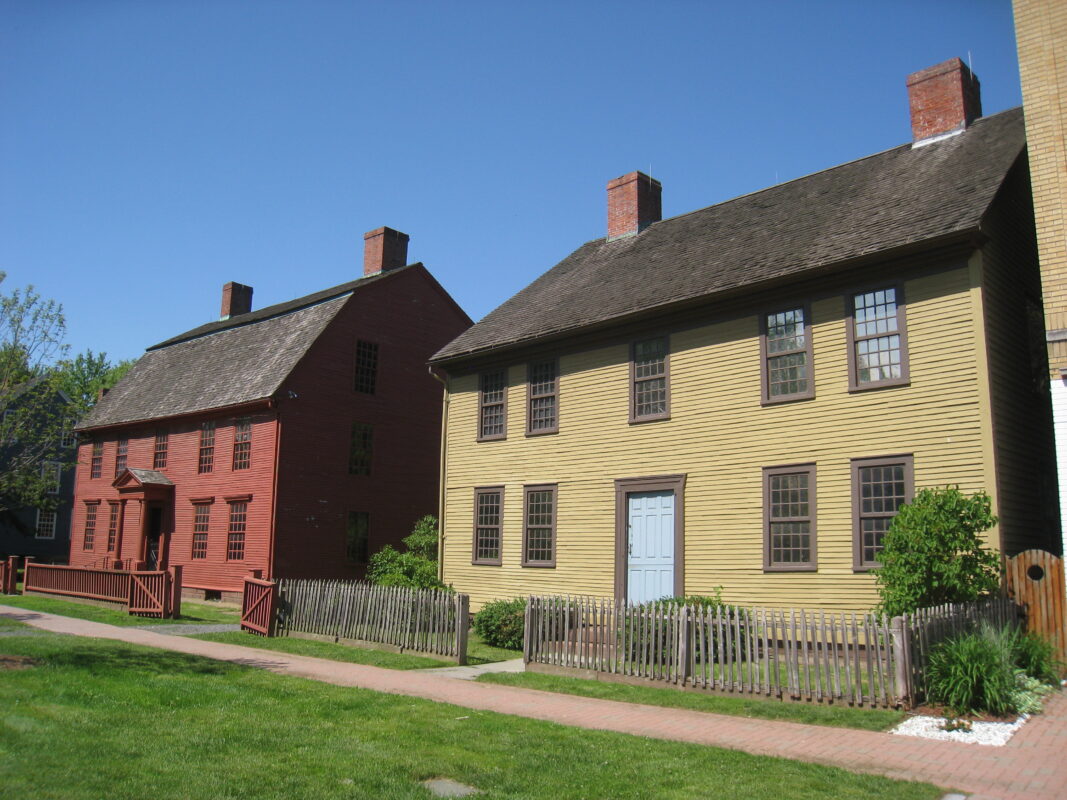
Tucked away in the historic heart of Wethersfield, Connecticut, the Webb-Deane-Stevens Museum offers more than just a walk through time—it’s a stroll into the realms of revolutionary history, colonial life, and perhaps even the supernatural. With carefully restored 18th-century homes and ties to America’s founding era, this museum is a must-visit for history buffs. But for those of us with a passion for the paranormal, whispers of colonial spirits and unexplained occurrences make this not just a museum—it’s a destination with layers that go beyond what the eye can see. Whether you’re here for the facts or the phantoms, the Webb-Deane-Stevens Museum promises an unforgettable journey into the past… and maybe the beyond.
The History
Historic Wethersfield: One of Connecticut’s Oldest Towns
Before diving into the museum itself, it’s important to understand where the Webb-Deane-Stevens Museum is located. Wethersfield was settled in 1634, and has long claimed the title of Connecticut’s oldest town—a distinction referenced as far back as the 1650 Connecticut Code, which named it “Ye Most Ancient Towne.” (Windsor also lays claim to this title, and the debate depends largely on how one defines “settlement” versus “town.”) Regardless of where you fall in that debate, Wethersfield is deeply entwined with early American history—from colonial prosperity to revolutionary fervor—all centered around its prized historic district, the largest in the state, spanning two square miles and containing over 1,100 buildings.
The Three Historic Homes
The Webb-Deane-Stevens Museum is a complex of three restored 18th-century homes: the Joseph Webb House, the Silas Deane House, and the Isaac Stevens House. Each property offers a unique glimpse into colonial and early American life—and each has its own fascinating story to tell.
The Joseph Webb House (1752)
Arguably the crown jewel of the museum, the Joseph Webb House gained national prominence when it hosted General George Washington for five nights in May 1781. Washington stayed here while planning military strategy with French General Rochambeau—a conference that set in motion the campaign culminating in the decisive victory at Yorktown later that year. The room in which Washington slept still retains its original 18th-century flocked wallpaper, and the house was designated a National Historic Landmark in 1961. Walking through this home is like stepping into a revolutionary war council meeting, complete with period furnishings, historical artifacts, and possibly even lingering energies of its famed visitors.
The Silas Deane House (1769)
Just next door stands the home of Silas Deane, completed in 1769. Deane was a Yale-educated lawyer who became one of Connecticut’s delegates to the First and Second Continental Congresses—and, most notably, the United States’ first foreign diplomat, dispatched to France in 1776 to secretly secure military supplies and negotiate the alliance that would prove critical to American independence. Deane’s life was storied and shrouded in controversy. Despite being instrumental in securing French support for the Revolution, he was recalled by Congress over accusations of financial misconduct—charges that were never proven. His fall from grace was swift and painful. In 1789, after years of exile in Europe, Deane boarded a ship to return to America, hoping to clear his name and rebuild his life. He fell suddenly and mysteriously ill aboard the vessel and died within hours. The cause of death was never determined; theories have ranged from suicide to poisoning by Edward Bancroft, a double agent who may have felt threatened by Deane’s potential testimony before Congress. A 1984 medical analysis, however, argued his symptoms were more consistent with long-standing tuberculosis. The house, now a National Historic Landmark, has been restored to reflect 18th-century elegance and offers a window into the life of a man once celebrated and then largely forgotten by history.
The Isaac Stevens House (1789)
Rounding out the trio is the Isaac Stevens House, a more modest but equally fascinating home representing life in the early republic. Stevens was a leatherworker who built the house in 1788–1789, shortly before his marriage. Over time, his fortunes rose—he eventually became a banker—making his trajectory a quintessentially American story of individual opportunity in the post-revolutionary era. The house has been restored to illustrate middle-class life in the 1820s and 1830s, with many original family possessions on display. Remarkably, the house remained in the Stevens family and their descendants for 170 years. Though it may not have the revolutionary drama of its neighbors, the authenticity and quiet charm lend it a compelling atmosphere—some even say a haunting one.
The Amy Cogswell Colonial Revival Garden
In addition to its historic interiors, the museum boasts a Colonial Revival garden designed in 1921 by Amy Cogswell, one of the first female landscape architects in the United States. Cogswell, a graduate and later headmistress of the Lowthorpe School of Landscape Architecture—the first American institution for women studying the field—created a garden featuring classic arbors and an assortment of old-fashioned flowers including hollyhocks, larkspur, foxglove, and peonies. While it draws on colonial aesthetics, it is a 20th-century decorative garden rather than a true reproduction of an 18th-century working garden. The original design was lost for decades before being rediscovered in the archives in the 1990s and restored. Today, the quiet corners and symmetrical hedges create the perfect setting for reflection—or, perhaps, spirit spotting.
The Haunt
The Webb-Deane-Stevens Museum is not among New England’s most famous haunted destinations, but it has quietly earned a place on paranormal databases and haunted-location lists for the state of Connecticut. The museum itself does not market the property as haunted—its focus is squarely on history and education—but that hasn’t stopped visitors, staff, and paranormal enthusiasts from noting that something about these centuries-old homes feels a little more alive than it should.
What Visitors Have Reported
The reported experiences at the Webb-Deane-Stevens Museum tend to be subtle rather than dramatic. The Joseph Webb House, with its deep ties to the Revolutionary War, has drawn the most attention. Visitors have described encountering cold spots and hearing unexplained noises, particularly during twilight tours when the fading light casts long shadows over the old wooden floorboards.
Beyond the Webb House, the broader property carries the kind of atmosphere that invites speculation. These are homes where people lived, worked, grieved, and died over the course of centuries, and the weight of that history is palpable in a way that goes beyond what you’d expect from a typical museum tour.
The Tragedy of Silas Deane
If any spirit has reason to linger in Wethersfield, it may be Silas Deane. His story is one of remarkable service followed by disgrace, exile, and a mysterious death far from home. He never returned to the house he built, never cleared his name in his lifetime, and died under circumstances that remain debated to this day. While no specific, verified paranormal claims have been tied to the Silas Deane House, the emotional resonance of his story—ambition, betrayal, and an unresolved ending—is the kind of narrative that paranormal enthusiasts find compelling, and Wethersfield’s haunted reputation owes something to his legacy.
Seasonal Programming with a Spooky Edge
While the museum doesn’t host formal ghost hunts, it does lean into the darker corners of local history through seasonal programming. The popular Witches & Tombstones Tour takes visitors through the Isaac Stevens House for a recreated 19th-century wake, then on to the Wethersfield Ancient Burying Ground and the Buttolph-Williams House to explore stories from the Wethersfield Witch Trials. These are theatrical and educational events rather than paranormal investigations, but they offer an atmospheric way to experience the property after hours and connect with the community’s more unsettling past.
A Historic Haunt Worth Visiting
The Webb-Deane-Stevens Museum is more than just a time capsule—it’s a living, carefully preserved window into American history that rewards the curious visitor at every turn. For paranormal enthusiasts, this site offers something different from the average haunted attraction: not jump scares or dramatic ghost stories, but the slow, layered weight of nearly three centuries of human experience concentrated in a few colonial homes on a quiet New England street. The activity reported here is modest, the atmosphere is genuine, and the history is extraordinary.
Whether you’re drawn by the ghost of a forgotten diplomat, the echoes of a revolutionary war council, or simply the beauty of a restored colonial garden, the Webb-Deane-Stevens Museum is a destination that rewards a thoughtful visit. Come for the history. Stay for the feeling that the past hasn’t quite let go.