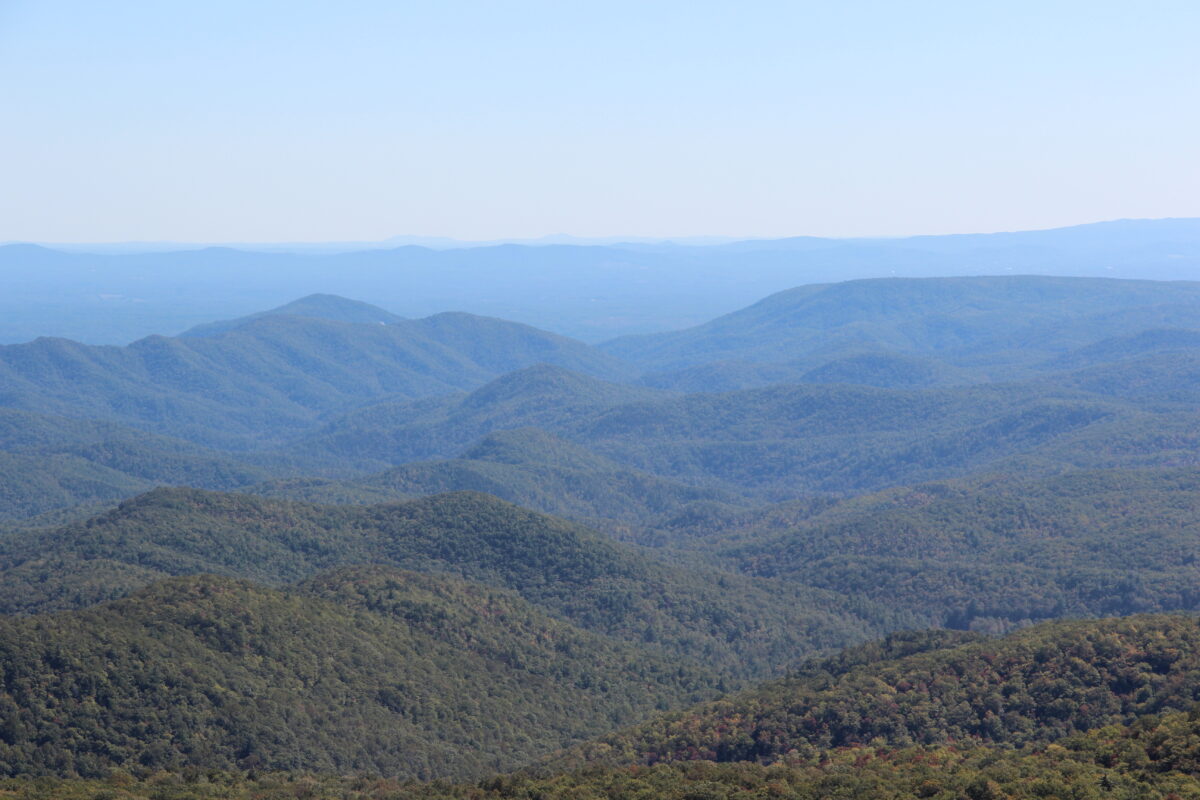
Tucked away in the heart of western North Carolina’s rugged wilderness lies a mystery that has eluded scientists, baffled locals, and intrigued ghost hunters for generations—the Brown Mountain Lights. These mysterious glowing orbs have been reported along the ridges of Brown Mountain for well over a century, flickering in hues of white, red, and yellow. Visitors to this quiet stretch of the Pisgah National Forest in Burke County are swept into a world where folklore and unexplained phenomena collide. Whether you’re a curious traveler, a paranormal researcher, or a night-sky enthusiast, you’ll find something enchanting—and maybe unsettling—about this elusive light show. Take a lantern-lit journey into the past, through swirling legends and scientific theories, and discover why the Brown Mountain Lights continue to haunt the Blue Ridge Mountains.
The History
Early Indigenous Legends
The tale of the Brown Mountain Lights begins long before Europeans set foot in the North Carolina mountains. The Cherokee and Catawba tribes spoke of ghostly lights in their oral traditions. According to legend, around 1200 A.D. a great battle was fought between the Cherokee and Catawba on Brown Mountain, and the mysterious lights are from the spirits of Indian maidens, wandering the ridges with torches in search of their warriors who died in battle. These early myths form the spiritual backbone of what many consider to be the oldest accounts of the Brown Mountain Lights, though no written documentation of the lights exists before the early 1900s.
First Documented Sightings
The earliest published references to strange lights near Brown Mountain date to around 1910, roughly coinciding with the spread of electric lighting throughout the region. In September 1913, the Charlotte Daily Observer published a story describing unexplained lights rising over the summit of Brown Mountain, bringing regional attention to the phenomenon and prompting both scientific curiosity and public speculation. Reports came from railroad workers, farmers, and local residents who described lights that would rise above the ridgelines, hover, dart around, and then suddenly vanish.
Around this same period, a family tradition passed down through the Wiseman family held that a man named Josiah Lafayette “Fate” Wiseman had first noticed a recurring flash of light from a ridge overlook as far back as the 1850s, though this account wasn’t published until 1971 and some researchers believe the light he described was consistent with a distant train headlight rounding a curve—the first train in western North Carolina began nightly service between Morganton and Salisbury in 1858.
Government Investigations
Curiosity eventually drew the attention of the U.S. government. In 1913, U.S. Geological Survey scientist D.B. Sterrett visited the area and concluded the lights were reflections from passing locomotives—a finding that frustrated locals who insisted the lights had been seen even when trains weren’t running. A more thorough investigation followed in 1922, when USGS geologist George R. Mansfield spent two weeks in the area using a map and an alidade telescope. He ruled out several possible explanations, including St. Elmo’s Fire and fires from moonshine stills, before concluding that the lights people were seeing were trains, car headlights, and brush fires. While this ended widespread public concern at the time, it did not satisfy everyone—and the lights never stopped being reported.
Despite the official explanations, other theories have been proposed over the years, including geological activity related to the nearby Brevard Fault, ball lightning, bioluminescence, and piezoelectric effects from pressure on quartz in the bedrock. None has been definitively proven.
A Place in Popular Culture
The Brown Mountain Lights secured a lasting place in American folklore largely through music. North Carolina native Scotty Wiseman wrote the song “Brown Mountain Light” sometime in the 1940s, drawing on stories his great-uncle Fate had told him as a boy. In the song, the light comes from a ghostly lantern carried by a faithful slave searching for his master who was lost on the mountain—a search that continues even from beyond the grave. The song was later performed by Tommy Faile on Charlotte’s WBTV, and recorded by artists including the Country Gentlemen and the Kingston Trio, making the Brown Mountain Lights the most widely known ghost story in North Carolina.
The phenomenon has also drawn attention from television and film. The lights were featured in the 1999 X-Files episode “Field Trip,” in which FBI agents investigate mysterious deaths near Brown Mountain. In 2010, the lights were the subject of an episode of National Geographic’s Paranatural. The 2014 found-footage horror film Alien Abduction was directly inspired by the lights and the remote mountain setting. Researchers from Appalachian State University have monitored the mountain with cameras for years, and in 2016 captured an unexplained ball of light on multiple cameras simultaneously—an image that made regional news and renewed public interest.
Over time, the Brown Mountain Lights became more than just a natural curiosity—they became a symbol of North Carolina’s mystical heritage and continue to attract visitors year after year.
The Haunt
While many believe the lights have a natural explanation, the experiences reported by visitors and locals over the years have kept the supernatural interpretation very much alive.
What People See
The lights are most commonly described as small, glowing orbs—roughly the size of a distant streetlight—that appear at various heights above the mountain or down in Linville Gorge. They can glow faintly or burn brightly, and witnesses have reported colors including white, red, and yellow. Some appear stationary while others move, sometimes slowly and deliberately like someone walking with a lantern, and other times darting rapidly or changing direction in ways that seem purposeful. Witnesses have described lights that rise through the trees, hover for a few minutes, and then vanish without explanation.
One recurring theme in eyewitness accounts is the sense that the lights display something like intelligent behavior. Some observers have reported that the lights seemed to respond to their presence—following them, pausing when watched, or disappearing and reappearing in a different location. Others have described the experience as simply eerie: a solitary light drifting through an empty wilderness where no one should be carrying a lantern.
The Legends That Linger
Beyond the Cherokee maiden legend, two other ghost stories are most commonly associated with the lights. The most famous, popularized through Wiseman’s song, tells of a plantation owner who vanished while hunting on the mountain. His enslaved servant returned night after night with a lantern to search for him, and the light is said to be that faithful spirit, still searching from beyond the grave.
Another well-known legend dates to around 1850 and tells of a woman named Belinda who, along with her child, was murdered on the mountain by her abusive husband. Search parties scoured the mountainside with lanterns before her body was found at the base of a cliff, and the lights are said to be echoes of that search—or perhaps Belinda’s own restless spirit.
Visiting the Lights
The lights appear sporadically and are not guaranteed on any given night, but persistent visitors are often rewarded. They are most frequently reported on clear, dry nights in autumn, and moonless conditions improve visibility. The key viewing locations are well established:
Wiseman’s View Overlook sits above the western side of Linville Gorge, offering a panoramic view of the area where lights are most commonly reported. It is located about five miles south of Linville Falls on Kistler Memorial Highway. The overlook is dark and remote—bring your own light for the short trail.
Brown Mountain Overlook on NC Highway 181, between mile markers 20 and 21, provides a direct westward view toward Table Rock and Hawksbill Mountains, with Brown Mountain beyond. This is the most accessible viewing location.
Lost Cove Cliffs Overlook on the Blue Ridge Parkway at Milepost 310 offers a view of Brown Mountain itself, though vegetation has encroached on the sightline in recent years.
Lights have also been reported from atop Table Rock and from within the Linville Gorge Wilderness itself, though these locations require more effort to reach.
Worth the Journey
Whether you arrive armed with a camera or simply an open mind, the Brown Mountain Lights offer something rare—a genuine, long-documented mystery in a stunning natural setting. Scientists have studied them for over a century without settling the question, and people continue to report seeing things they can’t explain. The lights may be fleeting, but the experience of standing on a dark overlook above Linville Gorge, scanning the ridgeline, and wondering what you might see is something that stays with you. The town of Morganton serves as the starting point for most visits, and Burke County tourism offers maps, viewing guides, and occasionally guided excursions to the overlooks. Bring a flashlight, bring patience, and bring a willingness to sit in the dark for a while. The lights don’t appear on command—but when they do, you’ll understand why people have been coming back to this mountain for over a hundred years.