
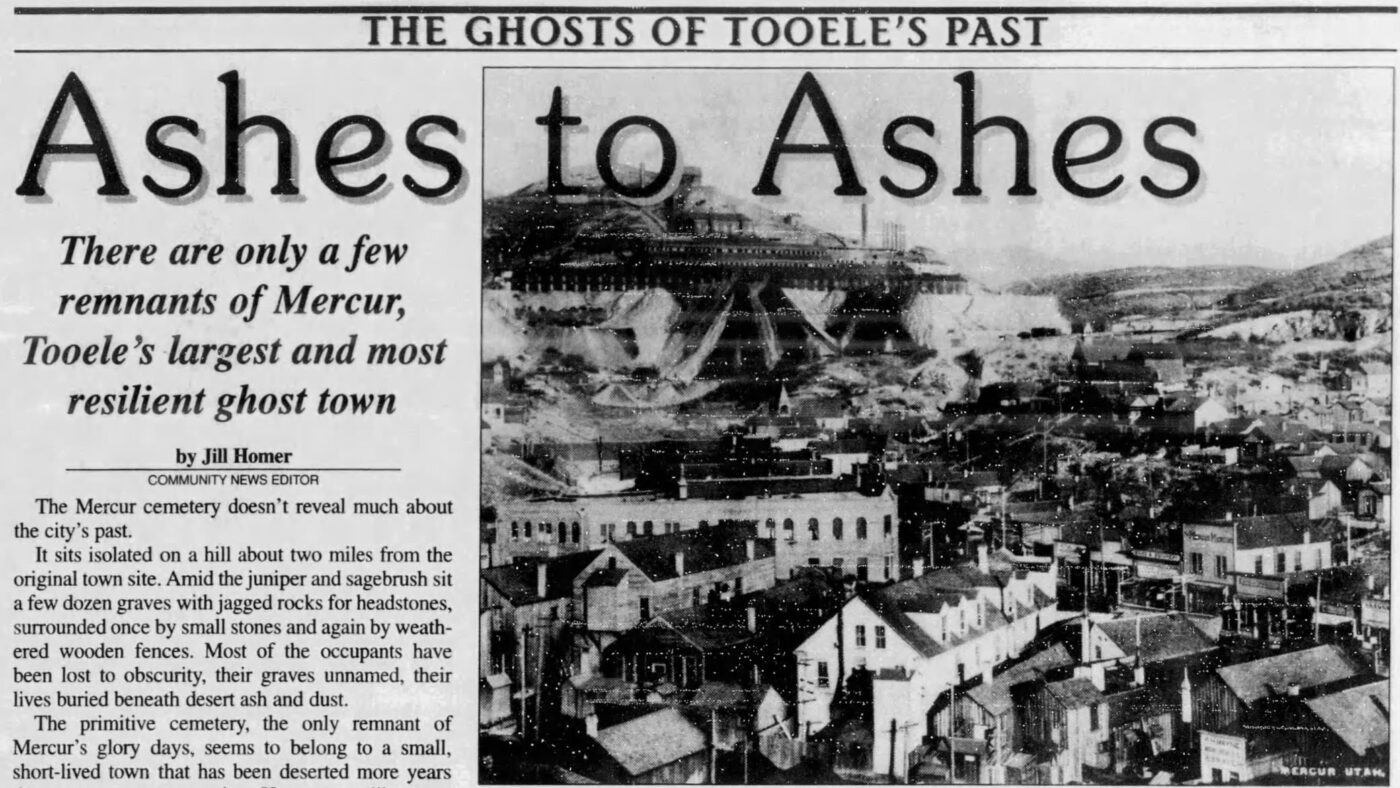
Tucked away in the desolate Oquirrh Mountains of Utah lies a forgotten landmark that echoes with history—and perhaps something more mysterious. Mercur Cemetery is all that visibly remains of the once-booming mining town of Mercur, Utah, a place that thrived in the late 19th and early 20th century. The winds that whisper through the trees seem to carry with them the voices of the past, and for those drawn to the paranormal or a taste of historical adventure, Mercur Cemetery offers both. As an abandoned cemetery in a ghost town long since vanished, it offers a uniquely atmospheric setting for ghost hunters, history buffs, and those who enjoy the strange corners of the American West.
The History
Mercur: From Gold Rush Town to Ghost Town
Mercur, Utah was once one of the state’s most significant and prosperous mining towns. Gold was first discovered in the area in 1870, but the ore was unusual—the gold particles were microscopic and invisible to the naked eye, making them impossible to extract using conventional methods of the day. It wasn’t until the 1890s, with the development of new cyanide processing techniques, that prospectors and miners flocked to the region. In 1891, Mercur became the site of the first successful use of the cyanide process for gold extraction in the United States—a method that would go on to dominate gold metallurgy worldwide. At its peak, Mercur was a booming settlement with a population of around 5,000 to 6,000, featuring everything from saloons and general stores to hotels and a post office.
The name “Mercur” has an interesting origin. In 1879, a Bavarian prospector named Arie Pinedo discovered a deposit of cinnabar—a bright red mineral that is the primary ore of mercury—in the area. He named his claim using the German word for mercury: Merkur. The name stuck, and when the town was later rebuilt on the old site of Lewiston (a name already taken by another Utah town), residents adopted the name Mercur. Interestingly, while the town was named for mercury ore, the district actually became Utah’s largest mercury producer, recovering over 3,400 flasks of mercury in addition to its famous gold output.
The Mercur district ultimately produced approximately 2.5 million ounces of gold over its lifetime, making it Utah’s largest primary gold mining district. During the initial boom period from the 1890s to 1913, the mines yielded more than $16 million in gold (in early 1900s dollars). This period marked a golden era where the town flourished with families, workers, clergy, and even theater performers passing through its rugged mountain landscape.
But as with many mining towns of the era, Mercur’s prosperity was short-lived. A catastrophic fire in 1902 devastated most of the town, and although rebuilding efforts were launched, the boom had passed. By 1913, the mine closed as ore grades declined and operations became unprofitable. The town’s residents moved on in search of new opportunities, and Mercur’s pulse faded into silence, leaving only remnants of the settlement behind—chief among them, its cemetery.
The Final Resting Place: Mercur Cemetery
Today, Mercur Cemetery stands as a solemn reminder of those bygone days. Located a few miles off Utah State Route 73, the cemetery sits in a lonely spot between scrub brush and rocky hillsides. The graves here date from approximately the 1890s to the early 1900s, a period that saw both the rise and fall of the town. Used by the residents of Mercur and surrounding settlements, the cemetery includes the graves of miners, children, women, and men who lived and died during the town’s short but vibrant existence.
The most striking feature of Mercur Cemetery is its isolated feel. There are no manicured lawns or decorative gates—just simple headstones, weather-worn wooden markers, and rusted fencing. Many of the graves are unmarked or have long since had their names erased by time.
For those who find beauty in decay, Mercur Cemetery offers a hauntingly peaceful glimpse into history—a place where time stands still and echoes of the past seem to linger in the air.
The Haunt
A Cemetery Steeped in Mystery
Given its lonely setting and tragic backstory, it’s no wonder that Mercur Cemetery has become the focus of local legends and paranormal interest. While not as widely known as some of Utah’s other haunted hot spots, the cemetery has been drawing more attention recently from ghost hunters eager to explore places off the beaten path. What makes Mercur Cemetery particularly compelling to paranormal researchers is its history. Many of the burial records from the cemetery were for children—victims of the harsh living conditions, disease, and high infant mortality rates common to mining towns of that era. This detail lends a somber weight to the numerous reports of child spirits said to haunt the grounds.
Reported Phenomena
Visitors and paranormal investigation groups have documented a wide range of experiences at the cemetery:
The Phantom Horseman: One of the most persistent legends involves a ghostly horseman said to gallop through the cemetery at night. Multiple sources report the sound of hooves on the hard desert ground, though no horse or rider is ever seen.
Child Spirits: The majority of ghosts reported at Mercur Cemetery are children. One recurring account describes a little girl who supposedly appreciates when visitors bring dolls or toys to leave at the graves. Many of the fenced grave sites are now filled with stuffed animals and small gifts left by visitors hoping to bring comfort to these young spirits.
Shadow Figures and Apparitions: Visitors frequently report glimpsing shadowy silhouettes moving between the headstones—figures that vanish when approached. Some have described seeing faces appear directly in front of their camera lenses, close enough to touch.
Phantom Sounds: Reports of disembodied footsteps on the dry earth are common, as are whispering voices when no one else is present. The crying of a child has also been reported echoing through the canyon late at night.
Equipment Anomalies: Paranormal research groups have reported that electronic equipment behaves strangely at the site. Batteries drain inexplicably fast, devices malfunction without explanation, and EMF (electromagnetic field) detectors register unexplained spikes—particularly near the older western edge of the cemetery.
Visual Phenomena: At night, visitors have reported seeing orbs of light drifting among the graves. More unusually, some accounts describe phantasmagoric flames rising from the cemetery, and photography enthusiasts have captured white misty anomalies in their images even under clear conditions.
EVP Recordings: Some paranormal researchers claim to have captured electronic voice phenomena (EVP) at the site—voices coming through digital equipment that appear to give intelligent answers to questions posed to the spirits.
Is it the Terrain or the Spirits?
There’s always a question in paranormal fieldwork: how much is suggestion, and how much is genuinely supernatural? The high desert terrain of the Oquirrh range is ripe for echoes and visual tricks of light. Uneven terrain and wind-curled trees can shift perception, especially as dusk sets in. The mineral deposits in the surrounding hills could potentially interfere with electronic equipment. And yet, those who’ve had encounters at Mercur Cemetery seem unwavering in their claims. Whether these phenomena are tricks of the environment or signatures of something more otherworldly, the site continues to inspire and mystify visitors.
Some paranormal researchers believe that the cemetery acts as a “liminal space”—a threshold where the boundary between worlds grows thin. As the last visible remnant of a ghost town, Mercur Cemetery may have absorbed the residual energy of the community that once thrived here: the miners who labored in dangerous conditions, the families who struggled against disease and hardship, and the children who never had the chance to grow up.
Whether these phenomena are tricks of the environment, the power of suggestion in an undeniably eerie setting, or genuine signatures of something beyond explanation, Mercur Cemetery continues to draw those seeking contact with the past. The site is most active at night, according to regular visitors, though even daytime explorations have left people with the unmistakable sense that they are not alone among the weathered graves.
For Paranormal Adventurers and History Seekers
Mercur Cemetery may not be the first name that comes to mind when you think of haunted destinations, but it should definitely earn a place on your paranormal bucket list. For those intrigued by the fusion of Wild West history and potential supernatural activity, there’s something remarkably compelling about this isolated resting ground.
Whether you’re a ghost hunter on the trail of elusive spirits or a historian fascinated by the stories of past lives carved into Utah’s rugged landscape, Mercur Cemetery offers a rich and haunting experience. Come prepared for a bit of hiking, respect the sanctity of the location, and bring your gear—you never know what you might encounter between the headstones or in the wind that rushes down from the craggy mountain slopes. After all, in ghost towns where only the dead remain, who’s to say what lingers beneath the surface?
And remember: sometimes, the quietest places tell the loudest stories.